

Smart Control and Protection of Seawater Desalination Equipment
Seawater Desalination equipment operates in a demanding marine environment where stable performance, equipment reliability, and efficient operation are essential. Modern seawater reverse osmosis (SWRO) systems include multiple processes such as seawater intake, pretreatment, high-pressure pumping, membrane separation, post-treatment, and freshwater storage. Each stage requires accurate monitoring and coordinated control to maintain consistent water production.
With the development of automation and digital technologies, smart control systems have become an important part of modern desalination engineering. By integrating sensors, programmable logic controllers (PLC), industrial monitoring platforms, data communication systems, and protection strategies, operators can monitor equipment conditions in real time, optimize operating parameters, and reduce the risk of unexpected failures.
Smart control is not only about automatic operation. It also provides protection for key components such as high-pressure pumps, RO membranes, valves, pipelines, and electrical systems. Through continuous data collection and intelligent analysis, desalination plants can achieve safer operation, improved energy efficiency, and longer equipment service life.
The Role of Smart Control in Seawater Desalination Systems
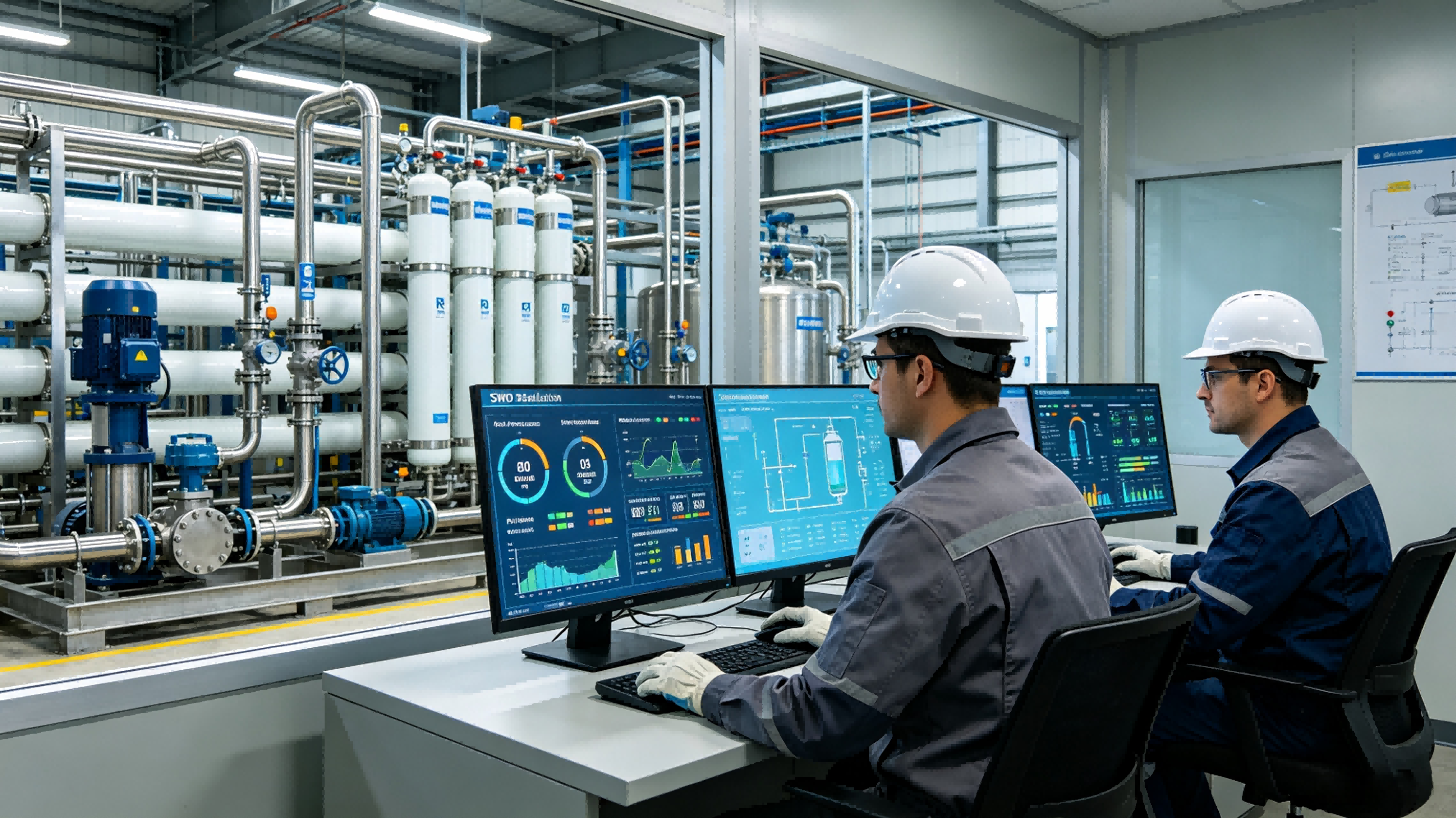
Traditional desalination systems require frequent manual adjustments of operating parameters. Modern SWRO plants use automated control systems to maintain stable operation.
A smart control system can automatically manage:
Seawater intake operation
Pretreatment processes
High-pressure pump operation
RO system pressure
Flow regulation
Chemical dosing
Product water quality control
Automation reduces the influence of human operation differences and helps maintain consistent system performance.
Continuous monitoring is essential for understanding Desalination Equipment performance.
Common monitored parameters include:
Feed pressure directly affects RO membrane performance and water production capacity.
Monitoring permeate flow helps evaluate membrane performance and identify possible fouling problems.
Conductivity measurement indicates product water quality and membrane salt rejection performance.
seawater temperature affects water viscosity, membrane flux, and operating pressure requirements.
Monitoring pump operation helps identify abnormal conditions such as vibration, overload, or pressure changes.
Storage tank monitoring ensures stable freshwater supply and coordinated equipment operation.
By collecting these parameters continuously, operators can quickly identify changes in system conditions.
Smart Control Architecture of Desalination Equipment
A modern SWRO control system usually includes several levels.
Sensors collect real-time information from different parts of the desalination system.
Typical instruments include:
Pressure transmitters
Flow meters
Conductivity sensors
Temperature sensors
Level sensors
Vibration monitoring devices
Accurate measurement is the foundation of reliable automatic control.
The PLC acts as the central controller of the desalination system.
It processes information from field instruments and controls:
Pumps
Motors
Automatic valves
Chemical dosing equipment
Alarm systems
PLC-based control allows precise management of different operating stages.
The HMI provides operators with a visual interface for monitoring and adjustment.
Operators can view:
Equipment status
Operating trends
Alarm information
Process parameters
Historical data
A clear interface helps operators understand system conditions and respond quickly.
Large desalination projects often use data management platforms to store and analyze operating information.
Historical data can support:
Performance evaluation
Energy analysis
Maintenance planning
Operating optimization
Equipment Protection Strategies in SWRO Systems
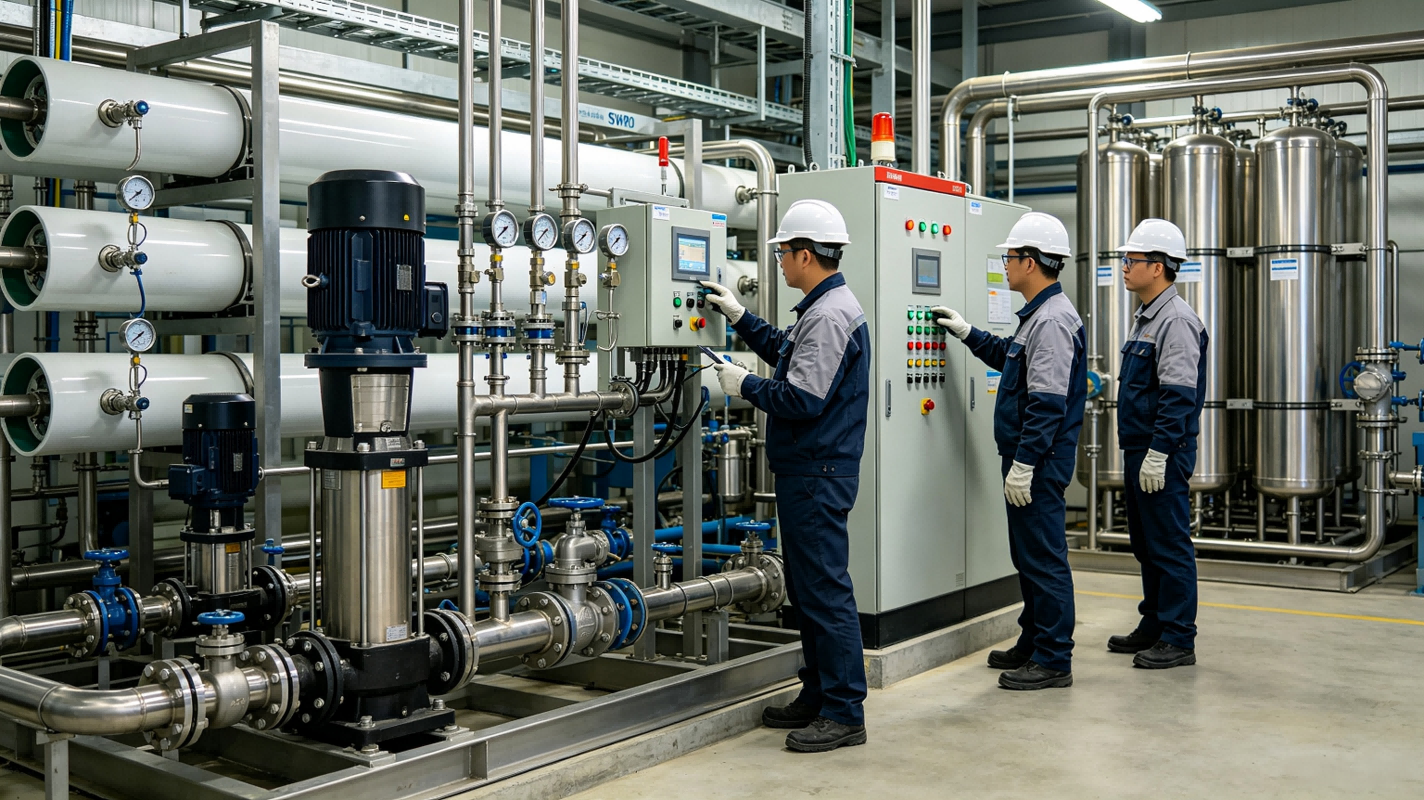
Protection systems are essential for preventing damage caused by abnormal operating conditions.
High-pressure pumps are among the most important components in SWRO systems.
Protection measures include:
Low inlet pressure protection
Overpressure protection
Motor overload protection
Temperature monitoring
Vibration monitoring
These measures help prevent pump damage and unexpected shutdowns.
RO membranes require stable operating conditions.
Smart protection strategies include:
Monitoring differential pressure
Controlling feed water quality
Preventing excessive pressure fluctuations
Managing startup and shutdown procedures
Monitoring conductivity changes
Proper protection helps reduce membrane fouling and extends membrane operating life.
Seawater contains chloride ions and other corrosive components that may affect equipment materials.
Protection systems monitor:
Pipeline pressure
Valve operation
Leakage conditions
Flow changes
Automatic valves can adjust flow paths and isolate equipment when abnormal conditions occur.
Intelligent Alarm and Fault Detection
Smart desalination systems use alarm functions to identify abnormal conditions.
Common alarms include:
Triggered when system pressure exceeds the designed operating range.
Possible causes include:
Valve blockage
Concentrate flow problems
Membrane fouling
May indicate:
Pump problems
Intake restrictions
Filter blockage
May indicate reduced membrane rejection performance or system abnormalities.
Sensors can detect abnormal conditions in:
Pumps
Motors
Electrical components
Instrumentation
Early warning allows operators to take action before major problems occur.
Remote Monitoring and Intelligent Operation
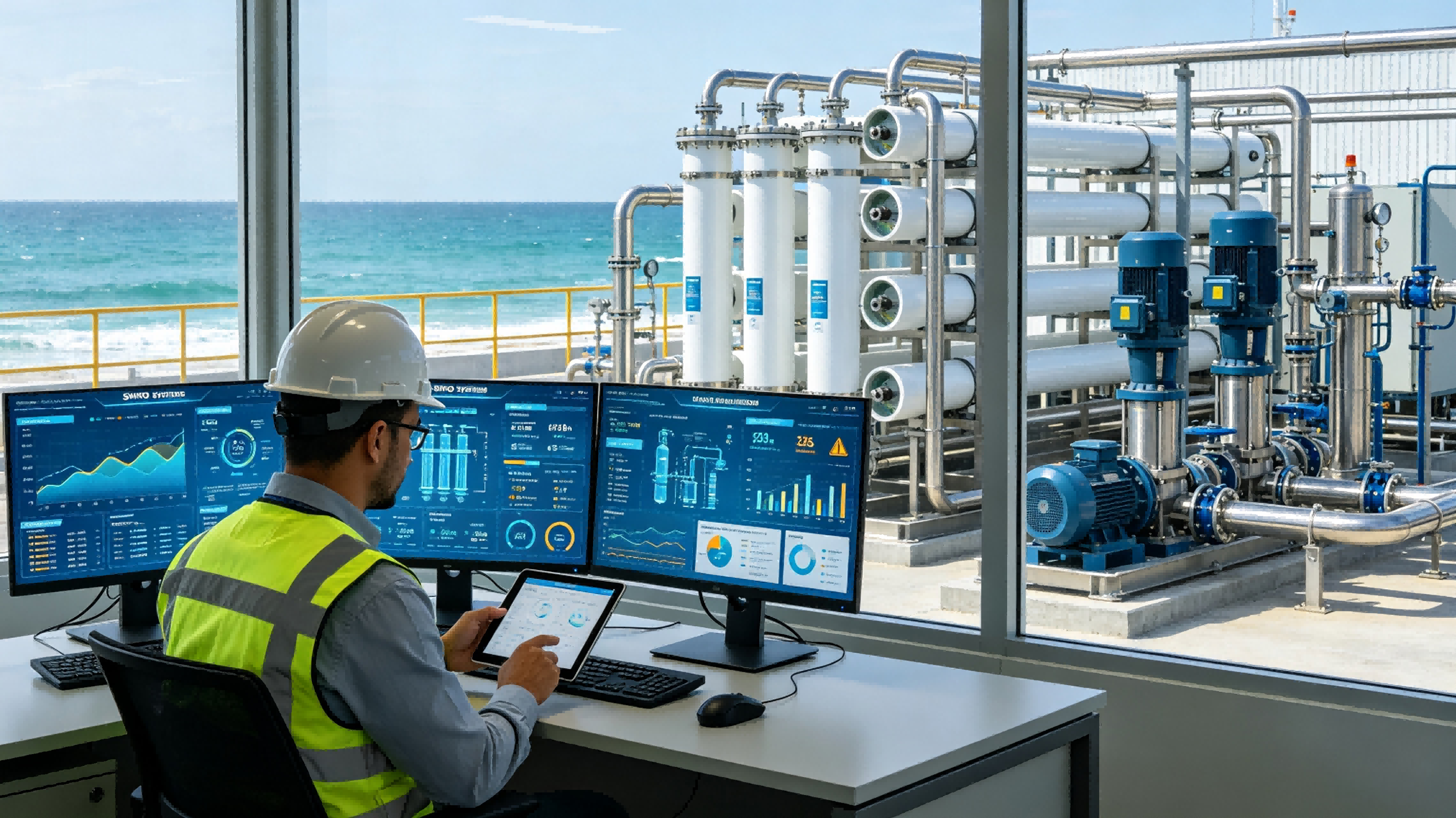
Remote monitoring technology allows operators to manage desalination systems from different locations.
This is especially valuable for:
Island desalination plants
Offshore platforms
Remote industrial facilities
Remote systems can provide:
Real-time equipment status
Operating data transmission
Alarm notifications
Performance analysis
Engineers can review system conditions without being physically present at the plant.
Data-Based Optimization of SWRO performance
Smart control systems generate large amounts of operational data.
Analyzing this data helps improve system efficiency.
Important optimization areas include:
Data analysis can identify:
Pump efficiency changes
Abnormal energy consumption
Operating conditions affecting power demand
Historical data helps evaluate:
Flow decline trends
Pressure changes
Cleaning requirements
Smart control helps balance:
Water demand
Equipment operation
Storage capacity
Energy consumption
Data-based operation supports more efficient desalination management.
Predictive Maintenance of Desalination Equipment
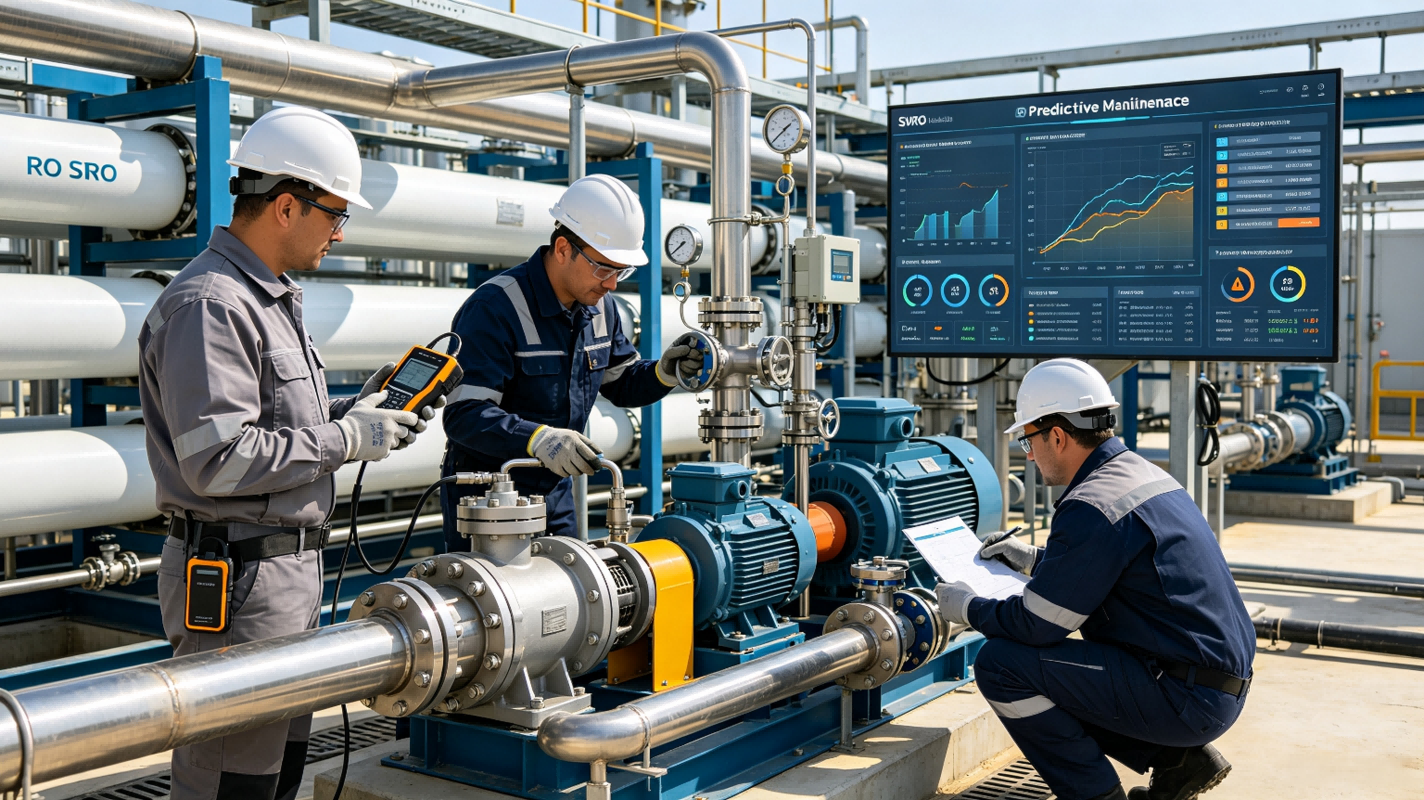
Traditional maintenance often follows fixed schedules.
Predictive maintenance uses operating data to identify potential problems before equipment failure occurs.
Monitoring factors include:
Pump vibration
Motor temperature
Pressure changes
Flow fluctuations
Equipment operating hours
Benefits include:
Reduced unexpected downtime
Better spare parts planning
Improved maintenance efficiency
Longer equipment service life
Smart Control for Different Desalination Applications
Island desalination plants often require reliable automatic operation because maintenance resources may be limited.
Smart control helps manage:
Variable seawater conditions
Freshwater demand changes
Remote equipment monitoring
Offshore facilities require compact and reliable water supply systems.
Automation helps maintain stable operation under marine conditions.
Industrial users require consistent water quality.
Smart control helps ensure:
Stable production
Continuous monitoring
Process reliability
Containerized systems are commonly used in remote locations.
Smart control allows:
Compact operation
Remote management
Reduced on-site staffing requirements
Maintenance Considerations for Smart Desalination Systems
Although smart systems improve reliability, regular inspection remains necessary.
Maintenance activities include:
Sensor calibration
PLC system checks
Communication system inspection
Instrument replacement
Software updates
Control cabinet maintenance
Reliable measurement and communication are essential for accurate automation.
Future Development of Intelligent Desalination Control
Future seawater desalination systems will continue integrating advanced digital technologies.
Development trends include:
More accurate sensors
Improved automation algorithms
Digital monitoring platforms
Artificial intelligence-assisted analysis
Better integration with renewable energy systems
These technologies will help desalination plants achieve more efficient and reliable freshwater production.
Conclusion
Smart control and protection systems have become important components of modern seawater desalination equipment.
By combining sensors, automation systems, data monitoring, and protection strategies, SWRO plants can achieve stable operation while reducing equipment risks.
Real-time monitoring helps operators understand system conditions, intelligent protection prevents damage to critical components, and predictive maintenance improves long-term reliability.
For seawater desalination projects operating in complex marine environments, smart control technology provides an effective approach to improving safety, efficiency, and operational management.
يستخدم هذا الموقع ملفات تعريف الارتباط لضمان حصولك على أفضل تجربة على موقعنا.
 English
 Portugues
 Pусский
 Français
 ไทย
ไทย Indonesia
 Melayu
 Tiếng Việt
 中文
中文 қазақ
қазақ עִברִית
 မြန်မာ
 ພາສາລາວ
 Filipino
 o'zbek
 Кыргызча
 тоҷикӣ
 ខ្មែរ
ខ្មែរ Türkmenler



 هاتف
هاتف
تعليق
(0)