
 English
 Portugues
 Pусский
 Français
 ไทย
ไทย Indonesia
 Melayu
 Tiếng Việt
 中文
中文 қазақ
қазақ עִברִית
 မြန်မာ
 ພາສາລາວ
 Filipino
 o'zbek
 Кыргызча
 тоҷикӣ
 ខ្មែរ
ខ្មែរ Türkmenler


Choosing the right Seawater Desalination equipment is an important decision for any project that needs a stable source of freshwater from seawater. Different projects have different water demands, seawater conditions, installation environments, and final water quality requirements. For this reason, seawater Desalination Equipment should be selected according to actual project conditions rather than based only on equipment capacity or general specifications.
Modern seawater desalination equipment can be configured for coastal facilities, islands, ships, offshore platforms, hotels, industrial plants, municipal applications, and remote areas. Among available technologies, reverse osmosis is widely used in seawater desalination because it can efficiently reduce dissolved salts and other impurities. Selecting suitable desalination equipment requires a clear understanding of raw water quality, freshwater demand, system configuration, operating conditions, energy requirements, maintenance, and installation conditions.
Why Choosing the Right Seawater Desalination Equipment Matters
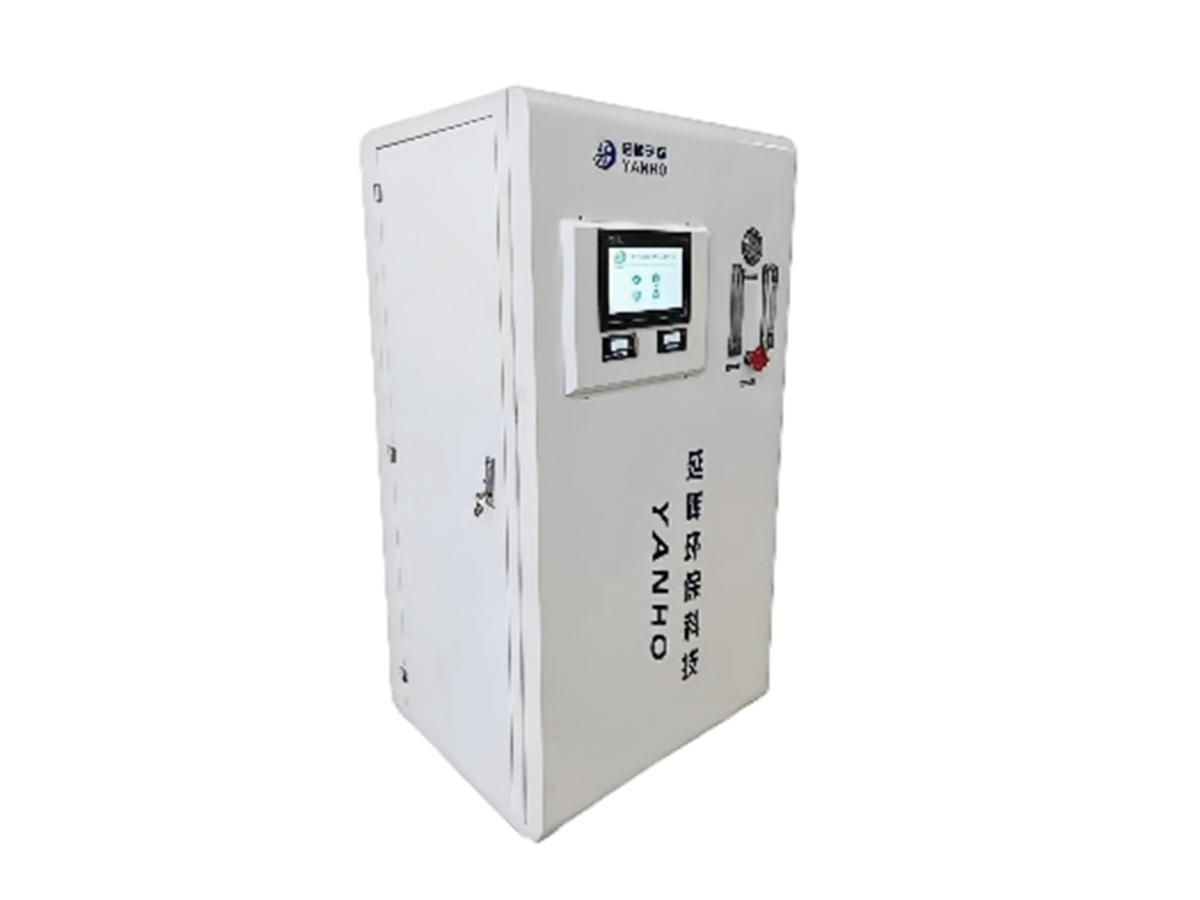
The performance of a Seawater Desalination System is closely related to the equipment configuration. Choosing unsuitable seawater desalination equipment may result in insufficient freshwater production, higher operating costs, unstable water quality, increased maintenance requirements, or difficulties during installation and operation.
The right seawater desalination equipment should match the actual requirements of the project. A compact system may be suitable for a small island facility or marine application, while a larger industrial project may require a more comprehensive desalination equipment configuration with multiple treatment stages and supporting systems.
Equipment selection should therefore be considered as a complete process. Instead of focusing on one component, project owners should evaluate the complete seawater desalination equipment system, including seawater intake, pretreatment, high-pressure pumping, membrane treatment, post-treatment, control systems, pipelines, storage, and supporting facilities.
1. Analyze the Seawater Quality First
Seawater quality is one of the most important factors when choosing seawater desalination equipment. Seawater is not identical in every location. Salinity, temperature, turbidity, suspended solids, organic matter, biological activity, and other characteristics can vary according to geographical location, season, weather, and local marine conditions.
Before selecting desalination equipment, the project should obtain reliable seawater quality data. Important parameters may include total dissolved solids, turbidity, temperature, pH, suspended solids, and other relevant indicators. This information helps engineers determine appropriate pretreatment and membrane system requirements.
If seawater contains a relatively high level of suspended particles or biological contaminants, the seawater desalination equipment may require more comprehensive pretreatment. Proper pretreatment protects downstream membrane components and helps maintain stable operation.
2. Determine the Required Freshwater Capacity
The required freshwater production capacity is another key factor when selecting seawater desalination equipment. Before purchasing or designing desalination equipment, users should determine how much freshwater the project actually needs.
Daily water consumption, peak water demand, operating hours, storage capacity, and future expansion should all be considered. For example, a hotel or resort may experience significant changes in water demand during different seasons, while an industrial facility may require a relatively stable supply throughout the year.
Seawater desalination equipment should have a suitable production capacity for the actual application. Selecting equipment with insufficient capacity may cause freshwater shortages, while selecting equipment with excessive capacity can increase equipment investment, energy consumption, and maintenance requirements.
For this reason, capacity should be calculated based on actual water consumption rather than simply selecting a larger desalination equipment model.
3. Consider the Required Water Quality
Different applications have different freshwater quality requirements. Drinking water production, industrial process water, cleaning water, cooling water, and general utility water may require different treatment configurations.
When selecting seawater desalination equipment, users should clearly define the required final water quality before determining the complete system configuration. Reverse osmosis can remove a large proportion of dissolved salts, but additional post-treatment may be required depending on the application.
Post-treatment can include pH adjustment, remineralization, disinfection, polishing filtration, or other processes. The appropriate configuration depends on the final application and water quality requirements.
Therefore, the right desalination equipment should not be selected only according to freshwater output. The complete water quality target should also be considered.
4. Evaluate the Pretreatment Requirements
Pretreatment is an important part of seawater desalination equipment. Before seawater enters the reverse osmosis stage, suspended solids, particles, microorganisms, and other potential contaminants need to be controlled according to the system design.
Common pretreatment configurations may include screening, multimedia filtration, cartridge filtration, ultrafiltration, chemical dosing, and disinfection. The exact configuration should be determined according to seawater quality and membrane requirements.
Effective pretreatment helps reduce membrane fouling and scaling. It can also support more stable desalination equipment operation and reduce the frequency of membrane cleaning and replacement.
When comparing different seawater desalination equipment options, users should therefore pay close attention to the pretreatment system instead of focusing only on the main membrane equipment.
5. Understand the Role of RO Desalination
Reverse osmosis is widely used in seawater desalination equipment. RO desalination uses pressure to force seawater through a selective membrane. Water can pass through the membrane while a large proportion of dissolved salts and other substances are rejected.
The RO desalination process normally produces two streams: permeate and concentrate. The permeate becomes the main freshwater output, while the concentrate contains a higher concentration of rejected salts and other substances.
The performance of RO desalination depends on seawater quality, operating pressure, temperature, membrane condition, recovery rate, pretreatment quality, and other factors. For this reason, choosing suitable seawater desalination equipment requires evaluating the complete RO desalination process rather than considering the membrane alone.
6. Consider Installation Conditions
Installation conditions can have a significant influence on seawater desalination equipment selection. A system installed in a coastal factory may have different requirements from equipment installed on a ship, offshore platform, island, or remote facility.
Available installation space, electrical supply, seawater intake location, freshwater storage, drainage, transportation access, environmental conditions, and maintenance access should all be considered during equipment selection.
For compact applications, space-saving seawater desalination equipment may be preferred. Containerized configurations can also be considered when transportation, relocation, or limited installation space is an important project requirement.
Marine and offshore applications may require additional attention to equipment structure, corrosion resistance, vibration, environmental conditions, and available space. These requirements should be incorporated into the desalination equipment design before manufacturing.
7. Evaluate Energy Consumption
Energy consumption is an important consideration when selecting seawater desalination equipment. RO desalination requires high-pressure pumping, so the high-pressure pump and hydraulic system can have a significant influence on overall energy consumption.
Project owners should consider pump efficiency, operating pressure, membrane performance, recovery rate, system flow, and other operating parameters when evaluating desalination equipment.
A suitable seawater desalination equipment configuration should balance freshwater production, water quality, energy consumption, and long-term operating requirements. Energy recovery systems may also be considered for suitable applications where they can improve overall system efficiency.
Energy consumption should not be evaluated separately from system performance. A lower-energy configuration is not necessarily suitable if it cannot meet the required water quality or production capacity.
8. Consider Equipment Materials
Because seawater contains a relatively high concentration of dissolved salts, corrosion resistance is an important consideration when selecting seawater desalination equipment. Materials used for pipelines, pumps, valves, pressure vessels, fittings, and other components should be suitable for the operating environment.
Material selection should consider seawater exposure, operating pressure, temperature, chemical dosing, installation conditions, and expected service requirements. Suitable materials can help improve equipment reliability and reduce maintenance problems associated with corrosion.
When comparing desalination equipment suppliers or system configurations, users should review the material specifications of important components instead of evaluating the equipment only by appearance or nominal capacity.
9. Review the Control and Monitoring System
Modern seawater desalination equipment generally uses instruments and control systems to monitor important operating parameters. Typical monitoring points may include pressure, flow, temperature, conductivity, water level, and other process conditions.
A suitable control system allows operators to understand the operating status of desalination equipment and identify abnormal conditions in time. Automated control can also simplify daily operation and help maintain consistent system performance.
When selecting seawater desalination equipment, users should consider whether the control system provides the required monitoring functions and whether the system can be integrated with existing facility controls when necessary.
10. Consider Maintenance Requirements
Maintenance is an important part of long-term seawater desalination equipment operation. Even a well-designed system requires regular inspection, cleaning, replacement of consumable components, and monitoring.
Pretreatment filters should be inspected regularly. Cartridge filters may require replacement according to pressure difference and operating conditions. RO desalination membranes should also be monitored for changes in flow, pressure, and water quality.
When membrane performance declines due to fouling or scaling, appropriate cleaning procedures may be required. Pumps, valves, instruments, pipelines, electrical components, and control systems should also be checked according to the operating schedule.
Therefore, when comparing seawater desalination equipment, users should consider not only initial equipment cost but also maintenance requirements, replacement parts, cleaning requirements, operating labor, and long-term management.
11. Consider the Project Environment
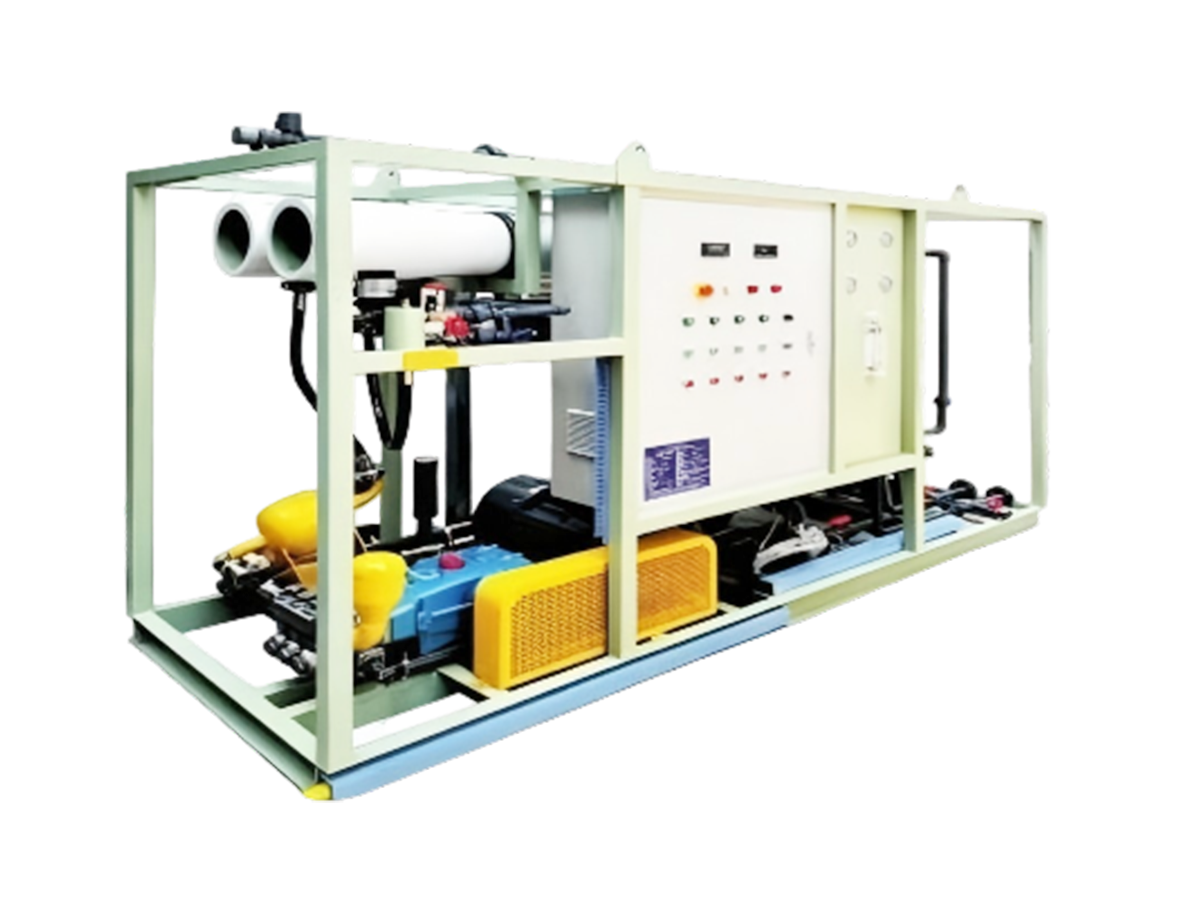
The operating environment can influence the design of seawater desalination equipment. Coastal areas may have high humidity and salt exposure, while ships and offshore facilities may experience vibration and limited installation space.
Island projects may need compact equipment that can be transported efficiently to the installation site. Remote projects may require equipment with convenient operation and maintenance characteristics because technical support and spare parts may not always be immediately available.
Industrial facilities may require seawater desalination equipment to integrate with existing water treatment systems, production processes, storage systems, and control platforms. Understanding the complete project environment helps engineers create a more suitable equipment configuration.
12. Compare the Complete System Instead of One Component
When comparing different seawater desalination equipment options, it is easy to focus on the price, membrane quantity, pump specifications, or freshwater production capacity. However, these individual parameters cannot fully represent the performance of a complete desalination system.
A better approach is to evaluate the complete seawater desalination equipment configuration. This includes pretreatment, RO desalination, pumps, membranes, control systems, pipelines, valves, electrical systems, post-treatment, storage, and other supporting components.
Users should also compare the system according to actual project requirements, expected operating conditions, maintenance requirements, energy consumption, installation conditions, and long-term operating costs.
Common Applications of Seawater Desalination Equipment
Seawater desalination equipment can be used in many areas where seawater is available but freshwater resources are limited. Different applications may require different equipment configurations.
Coastal industrial facilities
Island water supply projects
Marine facilities
Offshore facilities
Ships and vessels
Hotels and resorts
Remote communities
Municipal water supply projects
Industrial process water applications
Emergency freshwater supply
For coastal and island projects, seawater desalination equipment can provide a practical freshwater source without relying entirely on external freshwater transportation. For marine applications, compact desalination equipment can support onboard freshwater requirements. For industrial projects, larger systems can be integrated with existing water treatment processes.
Questions to Ask Before Purchasing Seawater Desalination Equipment
Before selecting seawater desalination equipment, project owners can prepare a detailed list of technical requirements. This can help engineers and equipment manufacturers determine a suitable system configuration.
What is the raw seawater quality?
What freshwater production capacity is required?
What final water quality is required?
Where will the seawater desalination equipment be installed?
How much installation space is available?
What power supply is available?
What pretreatment process is required?
What RO desalination configuration is suitable?
What are the expected operating hours?
What maintenance conditions are available?
How will concentrated seawater be handled?
Is future capacity expansion required?
Providing this information at the beginning of the project can make seawater desalination equipment selection more accurate and can reduce the risk of selecting an unsuitable system.
Conclusion
Choosing the right seawater desalination equipment requires a complete evaluation of the project rather than simply comparing equipment prices or production capacity. Seawater quality, freshwater demand, final water quality, pretreatment, RO desalination requirements, installation conditions, energy consumption, materials, control systems, and maintenance should all be considered.
The most suitable desalination equipment is the system that matches the actual operating environment and water treatment requirements of the project. A properly configured seawater desalination equipment system can provide a stable freshwater source for coastal, marine, industrial, municipal, island, and remote applications.
By collecting accurate water quality data, determining freshwater demand, defining the required water quality, evaluating installation conditions, and reviewing the complete system configuration, project owners can make a more informed decision when choosing seawater desalination equipment.
SEO Description
Learn how to choose the right seawater desalination equipment for your project. This guide covers seawater quality, capacity, RO desalination, pretreatment, water quality, energy consumption, installation conditions, materials, maintenance, and system selection.
SEO Keywords
Seawater Desalination Equipment, seawater desalination, desalination equipment, RO desalination, seawater treatment equipment, seawater RO system, seawater desalination system, desalination system selection



 هاتف
هاتف
تعليق
(0)